Wednesday, 13 May 2009

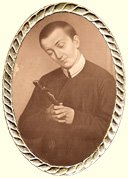
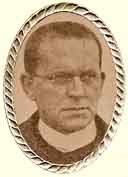
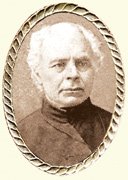
Rev. Fr Walter Lambert, C.SS.R. (1818-1903)

Fr Walter Lambert was born at Ballygillane, Tagoat, in 1818. At an early age he entered St. Peter’s College, Wexford, and afterwards went to Maynooth in 1834. He was ordained in 1848 by the Most Rev. Dr. Keating, and soon after was appointed curate in Taghmon with his uncle, Father Scallan, who was then a very old man. In 1851 he went to Cushinstown.
From the beginning he was full of religious zeal. He established in Cushinstown, what was then unknown in any part of the diocese in rural churches, confessions every morning, and Benediction of the Blessed Sacrament on Sundays. In 1853 he went to Annacurra and remained there four years, often preaching in the open air in the adjoining graveyard to overflowing congregations. On his departure from this parish, the people, as a token of their affection, presented him with an expensive watch—a gift considered rare in those days. In 1857 he was transferred to Gorey, but remained there only for one year. Father Kirk, who is a convert, but was at one time a protestant clergyman in Gorey, refers to Father Lambert in a little book of personal reminiscences:
“Among those who were good enough to call and see me was the Rev. Father Larnbert, head curate of the parish. He was in every way a very remarkable man; his influence among his parishioners was irresistible. He had a summary way of putting an end to incipient disorders. In one particular case, hearing that some men were taking too much drink and beginning to be disorderly in a publichouse, he suddenly appeared among them, and deeming force on such occasions better than persuasion, without saying a word he put his arm on the table and swept all the glasses and liquor on to the floor, and walked out of the room, leaving them to pay the cost.”
After a year in Gorey, on the opening of the two parochial churches in Wexford, by the late Canon Roche in 1858, Father Lainbert was sent to him as curate. He laboured in Wexford from this time until he joined the Congregation of the Most Holy Redeemer in 1875, a period of seventeen years, when, in order to prevent a public demonstration of the people’s affection, he left secretly for Bishop Eton, near Liverpool, to make his novitiate. What Wexford owes to the ministrations of Father Lambert it would be hard to exaggerate. His toil was incessant. He was the guide and friend of all, in temporal, as well as in spiritual affairs.
When he left Wexford he was penniless. His all had gone to the needy, to the sick and dying poor, whom he visited frequently and knew intimately. He was untiring in the performance of offices of mercy and charity, of which few, save those directly benefited, were ever aware.
He laboured with great patience and determination to reform drunkards, and to rid the town of many vices. But the poor he made his particular charge, and when Wexford was visited with distress, it was not only when the poor cried out in their anguish for relief that Father Lambert was active; he acted spontaneously and unasked. He knew the wants of the poor, for he was a frequent visitor at their homes, and when no longer able to provide for their wants himself, he was never slow to seek the aid of those who could afford to share their comforts with the needy. He was in the truest and noblest sense, Wexford’s benefactor. For, like the late Canon Doyle and the race of Priests who were his contemporaries, he belonged to the best and truest Priests that the country has produced.
He entered upon the work of the mission in the midst of the famine, when he beheld scenes that no pen can adequately describe, scenes, the horrors of which, later generations cannot realise.
During his life as a secular priest not alone did he devote himself to the routine work of a curate, but his services were sought and were never refused in numberless matters outside the definite sphere of daily duties. He established, and was first Spiritual Director of the Holy Family in Wexford. He also founded, and was first director of the Clothing Society. In times of severe weather he was the first to come forward to raise funds to supply the poor with coal and other material comforts.
Of his public career it may be remarked that as his love for his country and its people was genuine and ardent; he did not shrink from advocating their cause on any occasion in which he could render them a service. He was a most steadfast and determined man and no influence could make him swerve an iota from the opinions which he honestly held.
Before speaking of his life as a Redemptorist, it may be mentioned that Father Lambert’s piety led him, in the year 1870, to make a pilgrimage to the Holy Land. In after life he used to relate many most edifying and interesting anecdotes of this pilgrimage.
About twenty-eight years ago, when fifty-seven years old, he entered the Congregation. It might naturally have been supposed that a man of fifty-seven would be too old to enter on an entirely new career, and that, even if he did attempt this his life in a new sphere could be but short. But Father Lambert was no ordinary man. As a secular Priest he had gone through three trying periods of cholera and only the strongest constitution could have survived the work in which his sacred ministry constantly engaged him during those times. He was now about to submit his iron constitution to the wearing life of a missionary.
For many years he had felt the call to leave all for the love of God. At length, with great difficulty, he procured the permission of his Superiors to go to South Africa, in order to work there on the secular mission, where Priests were few and the Catholic population widely scattered. His books had already been sent on before him. Suddenly, and no doubt by an all wise disposition of Divine Providence, circumstances induced Father Lambert to change his plans. Instead of going on board the steamer for South Africa, he entered the Redemptorist Novitiate at Bishop Eton. This change of intention is very remarkable, for, as has already been said, he was a man not of a fickle disposition, but of iron resolution. He did change his mind however, and his novitiate began.
His Novice Master was Father Ziereis, a native of Bavaria. He was a strict disciplinarian and tried his new novice severely. There are many stories told of that Novitiate; a feature that shines out, in all these is, what one may call the joyous boyishness of this novice of fifty-seven years. Father Lambert had been his own master up to this time. Now he had to give up his own ways even in the smallest and most trifling matters. A few weeks before, he had been the idol of Wexford, looked up to by all, wielding as much power as any man in that town; now he kneels down when corrected by his Novice Master and associates and goes out to walk with young boy-novices. It was necessary for him to mould his life to the Redemptorist model, a thing which may be comparatively easy for one called to the Congregation in his youth, but which must have cost a man of Father Lambert’s age heroic self-denial. But Father Lambert had evidently counted the cost. He persevered, and in due time was professed.
Then began his wonderful missionary career of twenty-seven years, during which he preached in many places in Ireland, England, and Scotland. He was stationed for a long time in Clapham, London, where the Redemptorists have a large parish. Here he was very popular and had considerable influence over many. As part of the duties of parish work he had frequently to attend to “sick calls” by night.
At this time he gave many missions in London and in other parts of England. In these missions his labours, as may be expected, were mostly among his own people, and he used to go about, as is the custom, from house to house seeking the lost sheep of the House of Israel. Often did it happen that, when he called at the house of some Irish exiles, who had got on well in England, the door was slammed in his face, and he was rudely told that they would hear no mention of the mission or of religion.
During all his Redemptorist life he laboured unceasingly in the sacred tribunal of penance. On the English missions he often heard confessions almost until midnight, and would be again at work soon after five o’clock the next morning.
In Ireland he gave missions in most parts of the country. It was always with genuine pleasure that he visited his beloved native country, and the good people of Wexford were equally glad to see the kindly face of dear old Father Lambert.
During the twenty-seven years of his life as a missionary he often spent almost eight months of the year in giving missions. His order of the day on mission was, uniformly, as follows: He rose before five o’clock each morning; as soon as meditation was finished, at six o’clock, he went directly to his confessional; here he remained, always surrounded by numerous penitents, until the hour came for him to offer up Holy Mass; after Mass and Thanksgiving he took breakfast, for this he allowed very little time, and when breakfast could be given in the sacristy he would gladly take it there. It was his invariable rule to return immediately after breakfast to hear confessions once more; after this he would not leave the confessional until four o’clock in the afternoon. He always took his turn in giving the morning instructions and in preaching the evening sermons. Such was his mission life until three months before his death.
In Community life Father Lambert was full of playful mirth and fun. Up to the end he had the buoyant spirits of a young man; this trait in his character, together with a kindly nature, caused him to be much beloved by his confreres.
Father Lambert had above all the spirit of a priest of Jesus Christ. He had ever had, as he himself declared on his death bed, an abiding fear of offending God. This reverential fear ruled his life. His obedience was most remarkable. He was at times placed under Superiors who were not, perhaps, half his age, and yet their least word was as a law to him. He was by nature affectionate, and in his friendships most faithful, especially in those which he had formed in his youth. He had a great love also for our holy Rule and for its regular observance. Of this regular observance he was himself a model. He rose every morning with the Community, and made his half-hour’s morning meditation on his knees. This he observed until two days before his death.
For the last few months of his life he was suffering from cateract on his eyes. He had already lost the use of one, and the other had become very dim. Glasses proved useless on account of his advanced age, yet, though he had been dispensed from the obligation, he persevered in reading the Divine Office up to the end.
In the September of 1902 he gave a mission of three weeks duration in Kilmore, county Wexford, a parish situated near the one in which he was born. This was the last but one of his apostolic works. In October he gave a retreat in the Cathedral of Waterford, and this closed his long missionary career.
He seemed to enjoy his usual health during the three months that followed. Towards the end of January, however, he caught a chill, which brought on a slight attack of influenza. This occurred on Tuesday. On Wednesday and Thursday there seemed to be no immediate danger. Following, however, the prudent advice of Doctor Malone, Father Lambert asked for the last Sacraments. He was anointed at six o’clock in the evening, and received the Holy Viaticum at a quarter past ten at night. Then, too, the last Blessing was administered. During all this time he was calm and by no means weak. He answered all the prayers aloud. After the last Blessing had been given, Father Rector said to him: “Now, Father Lambert, you have received Our Divine Lord and His Blessing for a happy death; for a little while, quietly raise your heart to God in prayer.” Thereupon, the dear old man prayed aloud in a most fervent and touching way: “Oh, my God,” he said, “many souls have I prepared for death, and now I am myself prepared! Many a confession have I heard, many a soul have I directed; oh, may God grant that none of these may be lost through my fault! Oh, Jesus, have mercy on me, and when I appear before Thee grant me a favourable judgment!” These are some of the touching prayers that fell from his lips. It was now hall-past ten. He was not in pain. He seemed still to have much strength, yet after a little while he began to sink rapidly. He died calmly about midnight.
On Saturday, 31st January, the remains of Father Lambert, after the Solemn Requiem, sung by Father Rector in presence of his Lordship the Bishop of Limerick, were laid to rest in the vaults beneath the high altar. †

Read more...

Tuesday, 12 May 2009

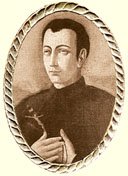
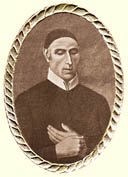
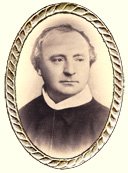
Rev. Fr James Hartigan, C.SS.R. (†1899)
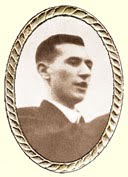
Father Hartigan’s life was one full of promise of great things to be done in priestly work. But God willed that it should be a short life, for death came when he was still at the early age of thirty-three years. He was born at Banogue, Croom, in County Limerick. His early studies were made in Mungret College, where he received a good classical and religious education. In his school days he was looked upon as one of very earnest genuine piety. He was sincere in friendship, and possessed a kindly humour that made him to all an agreeable companion. His intellectual talent was well above the ordinary.
From Mungret College he entered the Redemptorist Novitiae in 1887. He made his Vows on the 15th October of the year following, and then spent some years at the House of Studies in Teignmouth, Devonshire. Here he distinguished himself chiefly in the study of Philosophy. His Theological studies were made partly in Teignmouth, partly in Dongen, Holland, where he was ordained Priest on 27th August, 1893. He then went for a year to teach at Teignmouth.
Father Hartigan was a great lover of Astronomy, and it was a genuine pleasure to him when night came on, and the stars were visible, to go out on the balcony with his students and his telescope. It is to be feared that it was on one of these occasions he caught a cold, which affected his lungs so seriously that he was brought very near to death. He recovered, however, owing, the doctor declared, to the most painstaking and constant nursing which he received at the hands of the good Father and the infirmarian who attended on him.
Towards the end of 1894 he was removed to the Limerick house. For two years he taught in the Juvenate and then spent a year giving missions. Since his illness in Teignmouth he had never been the same in strength, both voice and lungs were weak. When in 1898 some Fathers were being sent to Australia, Father Hartigan was one of those who were chosen as well suited for the work there. It was hoped, too, that the climate would be more in his favour owing to the weak state of his lungs. His stay in Australia, however, was not a long one, only for eighteen months. He caught a severe cold at a mission given by him in Singleton, New South Wales, and one of his lungs was attacked. Notwithstanding every care his second lung became affected, and the doctor declared that a sea voyage was the best chance he had of recovery, if, indeed, there were any. Unfortunately there was not.
He arrived in Limerick in October, 1899, with Brother William who had come with him from Australia and nursed him most devotedly through all his illness. After an examination of the state of his lungs, Dr. Malone declared that there was no hope of his ever getting well. Father Hartigan himself was not deceived as to his condition, he knew he was going to die, and expressed a wish that he should due before Christmas, lest his death should cast a shadow of sorrow on the joys of the Christmas season. This was characteristic of him, he ever thought of others rather than of himself. During his illness two things were most noticeable in him, his spirit of cheerfulness and his spirit of prayer. He had prayed well in life, now at death it was his strength and comfort.
Making a most conscious and resigned offering of his young life to God he breathed forth his beautiful soul on Wednesday evening, November 13th, the Feast of St. Stanislaus. †

Read more...

Monday, 11 May 2009

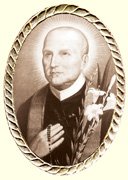
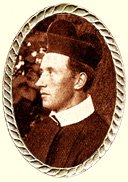
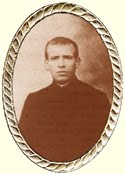
Rev. Fr Daniel Healy, C.SS.R. (1848-1898)

Father Healy was a native of Donegal. He was born on 14th May, 1848. Having been ordained Priest at Maynooth College on 19th June, 1874, he worked for five years as a secular Priest in the diocese of Down and Conor. In the summer of 1884, he entered the Redemptorist Novitiate and was professed at Bishop Eton on the 15th October, 1885.
Of his thirteen years of Redemptorist life, a few years were spent in Perth, Scotland; from the July of 1887 to the May of 1893, Father Healy was attached to the Limerick house, where he filled the office of Sub-Director of the Confraternity of the Holy Family, and later on was Minister in the Community for three years; then three years were spent in Clapham, when he again returned to Limerick – this time as Rector. This was quite at the end of 1896. He fell ill not long after his appointment as Rector, and his health was several times in a critical condition, but constant and fervent prayers were said for his recovery by the people who esteemed and loved him, and he lingered on for a year and ten months. During all this time Dr. Malone and Dr. Holmes were unwearying in their attention, visiting him almost daily. Their skill and generous kindness did much to prolong his life and relieve the great pain from which he was almost always suffering. At last, on 2nd November, All Souls’ Day, 1898, death came and brought, we may hope, an everlasting relief.

In illness, Father Healy’s most striking virtue was Christian fortitude; it was the source of much edification to the Community. He prayed much. In times of very severe suffering it was his custom to pray aloud to God and the Blessed Virgin to give him patience.

As a missioner his characteristic virtue had been love of labour. He is considered by many who knew the life he lived on missions, to have shortened his days by overwork. Nor during the years of his active missionary life was he free from those sufferings that crowded so thickly upon him towards the end. When quite a young Priest, Father Healy had met with a serious railway accident, which prostrated him for a long time. The spine had been injured, and other internal injuries received. It was believed that he would not recover. That he did recover sufficiently to take up again his work as a Priest, is in a great measure due to the care bestowed upon him by some kind Priests of his diocese, who took him to Dublin and placed him under the care of the most eminent medical men in that city. But the evil effects of that accident remained with him to his death, and must often have made doubly hard to bear, the hardships which he was so willing to take upon himself.

This sketch may well end with the words of a Priest who knew him for many years: “Father Healy,” he writes, “was one who liked to work hard and to live unnoticed. Many are the weary hours which he spent in the confessional, and he walked by night and by day through courts and lanes, and up and down rickety stairs looking for the careless Catholic. I knew that he still suffered from his spine, but he once said that his part was not to complain but to go on doing Gods work while he had strength.”

Read more...

Saturday, 2 May 2009

Very Rev Fr Bernard Hafkenscheid, C.SS.R. (1807 – 1865) — Chapter I

Doctor of Theology and one of the greatest
Redemptorist Missioners of all time

Written by Rev Fr M.J.A. Lans
Professor at the Minor Seminary of Haarlem, Holland


Click Here for all Fr Bernard chapters posted to-date

Readers of Papa Stronsay Texts will notice that Fr Bernard is also pictured in the title bar of this blog. This life, unfortunately for the moment only available in French, has been typed for the Texts from an 1882 edition. The work will appear chapter by chapter. The dedication to His Holiness Pope Leo XIII, Preface by the Redemptorist Cardinal Dechamps, Archbishop of Malines, and Author’s introduction will be reproduced at the end of the life. Fr Bernard was known, and is known to posterity, as simply that. Several Redemptorists who had complicated Dutch or German surnames used their Christian names throughout their lives.

Overview of his Life


Fr Bernard was a native of Holland, having been born at Amsterdam on the 12th of December, 1807. Having finished his ecclesiastical Studies in Rome, with great distinction, he took his degree of Doctor of Divinity, after which followed his ordination, on St Patrick’s day 1832. Very soon afterwards he entered the Congregation of the Most Holy Redeemer in Italy. The Superiors sent him for his Novitiate to Austria, where he made his Vows on the 7th of October, 1833.

He had every requirement looked for in a preacher, a most imposing presence, a voice of wonderful flexibility and power, graceful gesture, great talent for Ecclesiastical Studies, and still greater industry, a warm heart, and a piety which thirty-two years of ceaseless labour increased rather than diminished. He preached Missions in his own Dutch language, and if not with equal facility, certainly with equal force, in French and English. He knew German and spoke Italian fluently.

His Career as a missionary extended all over Holland, and into many parts of England, Belgium, and the United States. After his labours in the United States as Missionary and Provincial he came to Limerick, Ireland, to be Superior of the House and Director of all the missions in Ireland and England. He formed in those parts the younger Fathers, and taught them how to give Missions.

His contemporaries at Wittem said that they knewn him to place himself in an oratory that looked into the church, and there under the eye of Our Blessed Lord, think out and write his sermons. He had quite an extraordinary devotion to the Sorrows of Our Blessed Lady. In the intervals between the Missions, when he returned home for a little rest, outside the time for the community exercises, he could be found in his cell reading the works of the Fathers and great writers of the Church. In his spare moments he might be seen walking in the garden saying the Rosary of the Seven Dolours, which he sometimes recited several times in the day.

While instructing the children during a Mission given in 1865, he tripped over a low bench and fell heavily to the ground, thus badly injuring his leg. This was the beginning of the end. The injury received reduced him to a state of inactivity which brought on complications. He died at Wittem on the Feast of Our Lady Mother of the Divine Pastor, 1865. He had not yet attained his 60th year, while two of his companions in the Roman College became more than Octogenarians. One was Archbishop Kirby, late Rector of the Irish College, the other the late Holy Father Leo XIII. His Holiness retained a most affectionate remembrance of his fellow student; and, pronouncing distinctly his very difficult Dutch surname, often spoke of him as a very great missionary.


The Youth of Fr Bernard and his First Years of Study


(Summary in English: Fr Bernard was born of pious parents, Michel and Catherine-Adelaïde Hafkenscheid in Amsterdam. It was here that his father had come to seek his fortune and by dint of hard and persevering work he had succeeded. He was one of 12 children, six of whom died. It was Bernard who of the 3 remaining boys would occupy such a distinguished place in the history of the Catholic Church in Holland. As a boy he liked very much to play the priest. On one occasion while “saying Mass” he delivered a very moving “sermon” on the Holy Name of Jesus which touched the members of his household. Even at the age of ten he had a superiorly beautiful and resounding voice. He was a jovial and popular youth and was known amongst his companions as “Happy Nard”, a diminutive of Bernard. He prepared for his First Communion most seriously, his mother one day finding him prostrate on the floor of his room praying for the graces he needed on the great day. At the age of 13 he entered the Minor Seminary of Hageveld and later became such an ornament of that institute that his name, by that time famous, was used to prove the worth of the Seminary against critics. One of his masters later remarked when he became a Redemptorist that "I have always thought that for such a great soul, a single village or a single town would have been a too limited sphere of action.”)

Au commencement de ce siècle, vivaient à Amsterdam deux époux sincèrement chrétiens, que tous leurs amis et connaissances avaient en singulière estime.
Michel Hafkenscheid, né a Ulft en Gueldre, de parents plus distingués par leurs vertus que par leur richesses, avait, jeune encore, entrepris le voyage de la capitale des Pays-Bas. Il allait, selon l'expression vulgaire, y chercher fortune. Après quelques années d'un travail assidu, il épousa, le 21 juin 1801, Catherine-Adelaïde Weber, originaire d'Amsterdam, ornée comme lui d'une grande piété. Grâce à leur foi solide et à leur conduite chrétienne, les deux époux virent se réaliser en eux cette parole du Sauveur : Cherchez avant tout le royaume de Dieu en sa justice, et le reste vous sera donné comme par surcroît. En peu d'années, ils amassèrent une fortune considérable. Ils en firent un bon usage; car leur générosité les rangea parmi les catholiques les plus charitables d'Amsterdam. Dieu bénit leur union en leur donnant douze enfants. Six d'entre eux moururent en bas âge; les six autres, trois fils et trois filles, furent les imitateurs de leur foi et de leurs autres vertus : douce récompense des soins vigilants et assidus que s'étaient donnés les pieux parents pour leur éducation.
Dans cette belle famille, il y eut cependant un privilégié : ce fut le troisième enfant, Bernard-Joseph, dont nous allons écrire la Vie, et qui plus tard, sous le nom de Père Bernard, occupera une place si glorieuse dans l'histoire, principalement dans l'histoire de l'Eglise de Hollande.
Bernard-Joseph naquit un samedi, le 12 décembre 1807. De bonne heure on remarqua en lui une piété plus qu'ordinaire, laquelle cependant ne nuisit en rien à la franche gaieté de ses premières années.
Il se distinguait, parmi les enfants de son âge, par la jovialité et l'entrain de son caractère. Sans lui, leur joie manquait d'animation, leurs jeux n'avaient presque plus d'attrait. Toutefois, dès qu'il prenait part aux prières de la famille, ou qu'il se trouvait à l'église, sa gaieté faisait place à une certaine gravité; il dépassait même sous ce rapport ce que l'on attend pour l'ordinaire d'un enfant de son âge. A voir sa profonde piété, on eût difficilement reconnu en lui "le joyeux Nard". (Diminutif de Bernard, c'était ainsi qu'on l'appelait).
La tendresse avec laquelle, dès son enfance, il aimait les auteurs de ses jours, n'était pas moins remarquable; et en plusieurs occasions, il leur en donna les preuves les plus touchantes. Loin de s'affaiblir avec les années, cet amour filial n'en devint que plus fort et plus pur; d'où l'on peut déjà entrevoir la grandeur du sacrifice qu'il s'imposa plus tard, lorsqu'il se sépara de son père et de sa mère pour aller achever ses études à Rome, pour se renfermer ensuite dans la solitude d'un couvent, et enfin pour traverser jusqu'à trois fois l'Océan dans le but d'évangéliser l'Amérique.
Un de ses plus chers amusements consistait à "jouer au prêtre" (kerkje spelen), jeu si bien en harmonie avec les sentiments d'une famille de fervents catholiques. S'il est vrai, comme lui-même le disait souvent dans la suite, qu'une grande prédilection pour ce jeu est ordinairement un signe de vocation sacerdotale, ce signe se manifestait avec évidence dans le jeune Bernard. C'était là, pour ainsi dire, son amusement journalier, et il y réussissait si bien, que l'on était en droit de conjecturer les vues particulères de Dieu sur cet enfant. Lorsqu'il "disait la messe", les personnes de la maison devaient y assister. Et s'il arrivait que la dévotion enfantine et le sérieux édifiant avec lesquels il imitait les actions du prêtre, excitâssent le sourire des assistants, il s'en montrait froissé. Plusieurs fois même la colère s'empara de lui, parce que, dans sa simplicité, il croyait qu'on n'était pas suffisamment pénétré de la gravité de ce qu'il faisait. Il lui arrivait souvent, pendant "ces messes", de faire un sermon. Un jour, sa vocation spéciale au ministère de la chaire chrétienne sembla se révéler d'une manière frappante. Il se mit à prêcher sur le saint Nom de Jésus. Ses gestes animés, ses naïves paroles révélaient un si tendre amour envers le bon Sauveur, que les témoins de cette scène domestique s'en souviennent encore avec édification; ses parents ne furent pas les derniers à remarquer sa profonde piété, et telle fut la joie de leurs coeurs à la vue des heureuses dispositions de leur jeune fils, qu'ils ne purent retenir leurs larmes.
Vers l'âge de dix ans, Bernard avait déjà une voix sonore et supérieurement belle. Grande fut sa joie, quand on lui permit de chanter des solos dans l'église "Foi-Espérance-et-Charité". Il s'appliqua avec ardeur et succès à l'étude de la musique. Son talent musical, qui ne lui procurait alors qu'une honnête et douce récréation, il l'employa plus tard, en maintes circonstances, pour procurer la gloire de Dieu et rehausser la pompe des saintes cérémonies.
Bientöt vint le jour tant désiré, où le jeune Bernard s'approcha pour la première fois de la Table sainte. Les vieillards d'Amsterdam ne prononcent, encore aujourd'hui, qu'avec un profond respect le nom du prêtre qui desservait alors l'église "Foi-Espérance-et-Charité". Ils exaltent l'éminente sagesse, la haute vertu, l'éloquence, le dévouement, la cordialité de M. Gérard Van der Lugt, ce digne pasteur qui s'est acquis tant de titres à la reconnaissance de ses paroissiens.
Les excellentes instructions de cet excellent pasteur préparèrent on ne peut mieux le précoce enfant au grand acte de la première Communion. Il faut dire qu'elles furent parfaitement secondées par les soins attentifs d'une pieuse mère, qui ne cessait d'entretenir son enfant de l'importance de la première Communion, et qui mêlait souvent ses prières aux siennes pour lui obtenir la grâce de la bien faire. Le fait suivant montre à l'évidence combien le jeune Bernard était pénétré de la gravité de la démarche qu'il allait accomplir. Peu de temps avant le grand jour, il avait disparu tout d'un coup du milieu de ses compagnons. Sa mère inquète leur demande où il est. La seule réponse qu'ils peuvent lui donner c'est que, peu auparavant, il a encore pris part à leur jeu, mais qu'ils ignorent où il peut être pour le moment. Pleine d'anxiété, la mère se rend à la chambre de son fils. Elle l'y trouve, mais en quelle situation ? tout seul, les bras étendus, prosterné devant son crucifix, priant Dieu de bénir sa première Communion. Préparé de la sorte, il fut admis au banquet Eucharistique le 14 février 1820, dans l'église que nous avons nommée plus haut. C'est sans doute à la profonde piété dont il fut animé à l'occcasion d'un acte aussi sublime, qu'il faut attribuer l'abondance des grâces dont Dieu se plut dès lors à le favoriser.
La divine Providence avait mis dans le coeur du jeune Bernard un attrait prononcé pour l'état ecclésiastique. Aussi s'en ouvrit-il plus d'une fois aux auteurs de ses jours. Ceux-ci regardèrent comme un suprême bonheur pour eux que Dieu daignât appeler un de leurs enfants au service des autels. Tandis que d'un côté ils s'efforçaient par de ferventes prières d'attirer les bénédictions célestes sur un projet aussi important, de l'autre ils ne pouvaient en evisager les conséquences qu'avec joie. Les talents intellectuels de Bernard, son caractère noble et droit, son amour de la prière, son profond respect dans le lieu saint étaient à leurs yeux les signes les moins équivoques d'une vocation si sublime. Ils consultèrent à ce sujet leur vénérable curé, M. Van der Lugt; il fut d'avis, lui aussi, qu'un jeune homme doué de tant de talents et de vertus, était appelé à l'état ecclésiastique.
Quelques années auparavant, en 1817, trois prêtres distingués: Corneille-Louis, baron de Wycker Slaat (1), Guillaume-François Van Niel (2), et Corneille-Richard-Antoine Van Bommel (3), dont les noms passeront à la postérité, avaient acheté la maison de campagne de "Hageveld" dans la commune de Velzen, non loin de Harlem. Ils y fondèrent un séminaire et mirent à contribution, avec un dévouement sans bornes, leur fortune et leurs talents pour faire de cet établissemnt une école éminente de science et de vertu. Le séminaire conserva le nom de "Hageveld". Dieu donna à cette jeune plante une telle vigueur et une telle croissance, qu'en 1847 on dut faire l'acquisition d'un bâtiment plus vaste et plus convenable, situé à Voorhout, près de Leide. C'est là qu'aujourd'hui encore se trouve le petit séminaire de Harlem. En 1871, grâce aux soins de Sa Grandeur Mgr l'évêque de Harlem, cet établissement prit une nouvelle et importante extension.
Ce fut au séminaire de Hageveld que, tout heureux et tout pénétrés de reconnaissance envers Dieu, Michel Hafkenscheid et son épouse conduisirent leur fils, âgé de douze ans. C'était le 30 septembre 1820. On ne tarda pas à se convaincre que le jeune séminariste était vraiment à sa place. Des évènements, dont nous parlerons plus tard, furent cause que Bernard ne passa que peu d'années à Hageveld. C'en fut assez toutefois pour permettre à ses supérieurs de distinguer en lui une force d'âme, une piété, une noblesse de caractère, qui leur fit deviner longtemps à l'avance un ouvrier de premier mérite dans le champ de l'Eglise de Dieu. Disons-le : on reconnut aussi en lui une vivacité souvent excessive, une certaine fougue qui, même dans un âge plus avancé, lui donna beaucoup à lutter, et lui fournit plus d'une fois l'occasion de faire le sacrifice de sa volonté propre. Nonobstant ce défaut naturel, son caractère franc et enjoué, joint à une piété profonde, à des manières obligeantes et à une grande pureté de moeurs, lui gagnait facilement les coeurs. Aussi, plusieurs de ses condisciples de Hageveld peuvent encore attester combien Bernard Hafkenscheid était chéri de ses supérieurs et de ses condisciples.
Dès le premier jour, notre jeune séminariste se fit un devoir rigoureux de cultiver les heureux talents dont Dieu l'avait doué, afin de se perfectionner dans les diverses branches d'études auxquelles on l'appliquait. Au témoignage de l'un de ses condisciples, "il brilla dans toutes ses études, en sorte qu'il était habituellement le premier, ou du moins parmi les premiers de sa classe". La piété non commune, dont il avait déjà fourni tant de preuves au foyer paternel, reçut encore un notable accroissement sous la sage direction du régent, M. Van Bommel. Les leçons et les exemples de cet éminent directeur et des professeurs qui l'aidaient dans sa tâche, produisaient les plus beaux résultats sur l'intelligence et le coeur des jeunes séminaristes confiés à leurs soins. Bernard ne fit point exception. Le même témoignage invoqué plus haut, nous dit encore "qu'une conduite très pieuse et absolument irréprochable le distinguait entre tous".
Le regard pénétrant de M. Van Bommel n'eut pas de peine à remarquer les mérites exceptionnels de son nouvel élève. Aussi ne manqua-t-il pas d'en faire l'objet de ses attentions spéciales, et son dévouement ne se ralentit point, alors même que Bernard eut cessé d'être placé sous son autorité. L'influence que Mgr Van Bommel exerça sur son ancien élève, nous aurons l'occasion de la faire voir dans la suite de cette histoire, quand le diocèse de Liège deviendra le premier théâtre des travaux apostoliques du P. Bernard. Le même prélat déclara un jour, dans une réunion de personnages distingués, que le P. Bernard avait été un de ses meilleurs séminaristes à Hageveld. Plus tard, ayant appris son dessein d'entrer dans la Congrégation des Pères Rédemptoristes : "J'avais toujours pensé, dit-il, que, pour une si grande âme, un seul village ou une seule ville aurait été une sphère d'action trop restreinte".
Bien plus, lorsque, en 1840, le professeur Siegenbeek osa lancer publiquement cette accusation contre Hagenveld que "la stupidité y avait été organisée en grand, et qu'on y inculquait dans l'esprit des jeunes gens des principes dangereux à l'Etat", Mgr. Van Bommel se hâta de prendre la plume. Pour réfuter l'accusation, il n'hésita pas à citer les élèves de distinction qui s'étaient formés à Hageveld, et en particulier Bernard Hafkenscheid. Voici ses paroles : "Demandez au public ce qu'il pense d'un Hafkenscheid, ce docteur en théologie, ce puissant orateur, qui par l'éloquence et la sublimité de sa parole, remue des milliers d'auditeurs comme un seul homme, qui fait pénétrer la conviction dans leurs esprits et gagne leurs coeurs à Dieu, qui tout récemment encore vient de produire la plus salutaire impression sur les populations des deux villes importantes de Maestricht et de La Haye, sans en excepter les protestants eux-mêmes."
Nous n'avons pas besoin de dire la joie qu'éprouvaient les parents de notre séminariste, chaque fois que les renseignements de ses maîtres leur arrivaient; les notes étaient toujours excellentes. Pour ces parents vraiment chrétiens, la pensée qu'un de leurs enfants allait prendre rang parmi les prêtres du Seigneur, dépassait toutes les autres espérances qu'ils auraient pu concevoir. Leurs coeurs débordaient de reconnaissance envers Dieu, lorsque, considérant les heureuses dispositions et les vertus du jeune Bernard, aussi bien que les témoignages de ses supérieurs, ils ne pouvaient plus douter qu'ils ne vissent un jour en lui un prêtre saint et savant. C'est pourquoi ils envisageaient l'avenir avec une douce confiance. Cependant il plut à la divine Providence de disposer les évènements de manière à les éprouver touchant l'objet de leurs voeux; ils durent acheter au prix de bien des sacrifices la faveur après laquelle ils soupiraient avec tant d'ardeur.

To be continued...

(Typed by Mr Aime Dupont of Flanders)

(1) Il fut plus tard évêque de Curium i.p.i. Après avoir rendu de grands services à l'Eglise des Pays-Bas et des Indes hollandaises, il mourut le 10 novembre 1851, en sa maison de campagne de Oegstgeest, près de Leide, où il a immortalisé son nom par un établissement de bienfaisance. (Voir sa biographie dans le Katholiek, tom. XX.)
(2) Il naquit à Rotterdam le 23 mars 1793, et mourut le 30 novembre 1829, à Gand, où il s'était fixé dans le but de rétablir sa santé.
(3) Il fut plus tard évêque de Liège, et l'un des fondateurs de l'Université de Louvain. Décédé à Liège, le 7 avril 1852, il laissa à la Hollande, ainsi qu'à la Belgique, un souvenir impérissable de ses vertus et de ses travaux. Le Katholiek (tom. XXI), a donné une biographie de cet éminent prélat; elle est due à la plume de son disciple le plus distingué, le professeur Broere.

Read more...

Friday, 1 May 2009

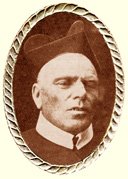
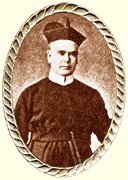
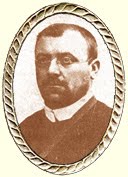
Rev. Fr Leopold Petsch, C.SS.R. (1821 - 1882)

The life of this venerable religious may be summed up in these words of Holy Writ: “The path of the just, as a shining light, goeth forward and increaseth even unto perfect day.” [Prov. IV, 18]

Father Petsch was a native of Moravia, then a province of the Austrian Empire. He was born on 23 August, 1821. His childhood and youth were passed in innocence and piety. When he had completed his twenty-first year, he entered the Congregation of the Most Holy Redeemer, and took vows at Mautern on 13 November, 1843, where he also completed his theological studies. Even at that early age, he gave proofs of his solid religious spirit, and particularly that of profound humility, which afterwards became the most distinctive trait of his character. He was ordained on 26 July, 1846.

America offered at that time a fertile field for the zeal and self-sacrifice of apostolic priests. Shortly after his ordination Father Petsch offered himself to labour in the far West for the most abandoned souls. In 1848 he and another Father came to America. His first field of labour was Baltimore, where the Redemptorists had charge of all the German Catholics within the city limits and far beyond. As the present systems of conveyance were then unknown, the pastoral care of the scattered flock entailed more than ordinary trouble and inconvenience. In October 1849 Father Petsch was transferred to Buffalo, where he laboured until April, 1851, from which time until May, 1852, he was engaged in work in Rochester.

During the following seven years, New York was the scene of his earnest apostolate. Four years he laboured among the faithful belonging to the church of the Most Holy Redeemer, and for the next three years he had charge of St Alphonsus’ Church in the same city. Here he displayed prodigious zeal. Immigrants found in him a guide and an advisor in the land of their adoption, and thus were preserved from the many dangers besetting their Faith. Men who had been strangers to religion for well-nigh a lifetime, adventurers, and people of every description flocked to the little church; and after listening to the earnest exhortations of Father Petsch resolved to forsake their evil ways.

They were soon reconciled by him to God in the Sacrament of Penance. He exercised a marvellous influence over the hearts of all, even the most obdurate sinners, and by his untiring efforts he brought many to the mercy-seat of God. The confessional was the principal sphere in which Father Petsch, throughout his whole priestly career, exercised his indefatigable zeal, and won the greatest number of souls to God.

In April, 1859, he was removed to Baltimore. In 1861 he became Rector of St Alphonsus’ Church in that city. In 1862 he was again transferred to New York as Rector. Three years later, we find him at Annapolis.

It was under him that the terrible drowning disaster took. Words fail to give an adequate idea of the shock which Father Petsch sustained when the sad news was brought to him. He was crushed by sorrow. Staggering to his room, he locked himself in, to commune with his God and beg for strength in that trying hour.

To remove him from the scene of such grief, the Superiors sent him to Pittsburgh, where he acted as Rector until 1871, when he was again appointed Rector of St Alphonsus’ Church, Baltimore. It was while stationed at this church that he was called one intensely hot day to administer the Last Rites of the Church to a dying man. On his way he was overcome by the heat, and in consequence of this sunstroke was brought to death’s door. He recovered however, but his health was never entirely restored.

In 1873, when Father William H. Gross, C.SS.R. the Superior of the Mission Church in Boston, Massachusetts, was elevated to the Episcopal See of Savannah, Georgia, Father Petsch was made Superior in his stead. In Boston he laboured in his own quiet way, but the blessing of God was with him. His zealous efforts were confined chiefly to the sacred duties of the confessional. The numerous penitents who chose him for their spiritual guide bear witness to the genuine apostolic zeal with which he administered this Holy Sacrament.

On 21 September, 1874, the first sod was turned for the foundation of the new church. It was Father Petsch himself who drew the lines, planted the stakes, and directed the labourers in the work of excavation. The new structure was completed on 7 April, 1878, and blessed by the Most Reverend Archbishop of Boston. On the following night, the inmates of the house were suddenly aroused by the terrible cry of “Fire!” The house was on fire, and some of the occupants barely escaped a most horrible death. Thus did good Father Petsch meet with numerous afflictions.

This new disaster was a great blow to his already impaired health. For this reason he was allowed to resign his office in 1877. He was not the man, however, to take rest. He continued to labour until 14 June ,1882, when he was forced to take to his bed. On 19 June he was reduced to such a state of weakness that the physician declared he could not survive forty-eight hours.

When the Rector questioned him as to what he would wish, he replied: “I want God.” His thoughts were all directed heavenward. On 20 June, 1882, his soul passed to its reward. Such was the life of this humble son of St Alphonsus.†

Read more...

Saturday, 18 April 2009

The Servant of God Br Rosario La Duca, C.SS.R (1793-1860)

Brother Rosario La Duca was born on the 6th of October, 1793 in Maschito, Potenza, the son of Carmine and Mario Cappariello. At the age of 14 he lost his father and, coming from a large, impoverished family, was obliged to start work as a shepherd.

From then on he would spend all day in prayer and to this purpose he carried small devotional images and some candles. He would erect little altars and, like St Paschal Baylon, he would pray continuously while the flock was grazing. He had a special devotion to the rosary. At the age of 20, in 1813, he bade farewell to his parents and the world so as to join the Redemptorist Order. He spent his noviciate in Illiceto with the fervour one would expect of a saint.

Here he accustomed himself to the physical mortifications which he was to practise until the end of his life: every morning he got up at 5 o’clock, often wore a hair shirt, and scourged himself at least twice a week; on Wednesdays, Fridays and Saturdays he made the Stations of the Cross before lunch and dinner; he kissed his fellow brothers’ feet to beg for soup; blended herbs for his main courses and ate kneeling or else seated on the ground in a slightly uncomfortable position. He often spent long hours on his knees without a break. And in addition to all these he carried out the daily and weekly hardships allotted to the novices.

He visited Jesus in the most Holy Sacrament of the Altar very frequently and received Him every day at Holy Communion. Each morning he asked Our Lady for her blessing and before putting on his cloak he would recite three 3 Hail Marys, prostrating himself and adding to each the beautiful ejaculation, “By thy Immaculate Conception, O Mary, make my body pure and my soul holy.”

He recited the Hail Mary many times throughout the day, especially at the beginning and end of different undertakings. He often prayed the Holy Rosary and happily carried the beads by his side, keeping them in his hands continuously when not occupied by work. Day after day he asked Our Lady for the grace of Holy Perseverance in the Institute whilst praying the Salve Regina.

He entertained a special devotion to Our Lady, Mediatrix of all Graces, who was venerated in his own village and of whom he had a picture in his cell. He also venerated Mary Most Holy using the titles Our Lady of Sorrows and The Immaculate Conception, and during the day would utter several times the affectionate prayer of St Alphonsus that begins,“Most Holy and Immaculate Virgin, and my Mother Mary”.

Like all Redemptorists of the day he wished to take the so-called “vow of blood.” This meant that he would be ready to shed his own blood if necessary, in order to defend the honour afforded to Mary by her Conception without stain of sin. This honour was defined by Blessed Pius IX as an article of faith on the 8th of September, 1854, and the news was received with an exceedingly joyful heart by Brother Rosario.

On every Wednesday and Saturday of the year he abstained from eating meat, as is usual on Fridays. On Saturdays, in imitation of St Alphonsus and St Gerard, the fast consisted mostly of bread and water and he also used to practice this mortification on the vigils of the principal feasts of the Blessed Virgin Mary. In the novena days that preceded such feast days, Br Rosario also adhered to the special mortifications and corporal penances of the Congregation.

At the end of his noviciate, he moved to the monastery of Pagani and from there he was allotted to that of Girgenti, Sicily.

In 1826 the Rector Major, Fr Cocle, moved to the Monastery of Girgenti and sought Br Rosario’s assistance in the library. What greater praise could testify to the virtue of our brother than the of faith placed in him by his superiors and especially by the illustrious Rector Major.

On the 8th of September, 1827, the feast of the Nativity of the Blessed Virgin Mary, he committed himself completely to God with the sacred vows of poverty, chastity and obedience, to which was added the vow of perseverance in the Institute.

He was entrusted with taking care of the monastery church and was thus engaged practically the entire day. He was constantly going back and forth, keeping it clean and putting everything in its place. So swift was he in discharging his chores as sacristan, that it seemed as though his feet were gliding above the ground.

Having organised everything, instead of taking a rest he would kneel down to pray. The faithful admired this and approaching him they would recommend themselves to his fervent prayers. He would reply with his habitual expression, “God’s will be done.”

The inauspicious decree of Garibaldi in 1860 was directed also against the Redemptorists, obliging them to dissolve before the 2nd of August. But where were they to go? Their love for the Congregation wouldn’t allow them to be separated from it, and therefore the decision was made to seek asylum on the island of Malta; but Brother Rosarius, because he was 67 years old and in poor health, stayed on in Sicily as custodian of the precious church built in 1858 in honour of St Alphonsus. In this way he was able to continue to show examples of prayer and penance as sacristan, a position he had previously held for many years to the great edification of the faithful.

After falling gravely ill, Alphonsus Manto (father of Paulo Manto who later identified Brother Rosarius’ grave) lovingly attributed his recovery to Brother Rosarius. The brother gave Alphonsus a pair of his poor, worn breeches saying, “Take these for your wife, Alphonsus, for they will be useful for your children.” They were indeed used by that pious family and still are as the breeches are passed from house to house to ward off various diseases.

On 19 August, 1860, on the Sunday before the Octave of the Assumption of the Blessed Virgin Mary, Rosarius said to his friend: “Go outside, Alphonsus, and leave me on my own.” As Alphonsus was honouring this request, he saw with amazement from the doorway Rosarius sitting on a bed with his face lit up as if in ecstasy in contemplation of the lovely statue of the Blessed Virgin Mary, Mother of Graces. (This statue stands today in the church by the altar of St Michael.) Later, Alphonsus went into the little bedroom and found the brother looking as if he were on the point of expiring and offering no replies to his questions. So Alphonsus recited the litanies for the commendation of the soul, and when he had finished, at 5am, Rosarius gave up his soul.

No sooner had the news of his death emerged when a stream of people came to see his body or touch it, and many objects in the room were apropriated as precious relics. The general consensus being that Br Rosario was a saintly man, gave rise to the idea of conserving his features by reproducing his visage on canvas. Beneath the image, D. Giov. B. Picone wrote the following words, summarising his entire life:

“Frater Rosarius Adduca laicus professus C. SS. R. lucanus, Charitate erga deum et pauperes fervens, sine intermissione per multos annos orans, durissimo vitae genere carnem spiritui subijciens, regularis observantiae exemplum. Animam Deo reddidit 19 Augusti 1860.”

A few days previously Brother Rosarius had said to Alphonsus: “You are to bury me before the altar of the Sorrowful Virgin.” However, permission was necessary from the dreadful authorities; and since there was no hope of this request being acceded to, his friends secretly took the body in the dead of night and buried it in the sacred place Rosarius had desired. Before the burial, Alfonsus had been to take his measurements for the coffin. Whilst about it, Br Rosario opened his eyes and looked at him for a while with a satisfied smile, a sign of gratitude for what Sig. Manto was doing for him.

The register of deaths in the public archives of Rome records it thus:
“Rosarius Adduca, laicus, obiit in Girgenti die 19 Aug. 1860, aetate provectus et jam morte vicinus cum Nostri insulam dereliquerunt.”

Upon returning to Girgenti in 1914, the Fathers found a statue of a Redemptorist in the sacristy of the Church of St Alphonsus. Beneath the statue they discovered the following inscription:

Brother Rosarius La Duca, professed lay brother of the Congregation of the Most Holy Redeemer.
Burning with love for God and for the poor, praying without ceasing for many years, subjecting the flesh to the spirit by a very harsh regimen of life, an example of regular observation of the Rule. He returned his soul to God on August 19th on the feast day of God’s servant, Alphonsus di Liguori.

Brief but memorable, the encomium reveals that by 1860 the feast of St Alphonsus had been translated to 19 August. Inscribed on the bottom of the tablet, apart from the date of his death, are the names of all those who had contributed to the carving on the statue by Onophrius of Zinafra.

In the previous year, when the Rector of the Monastery of Girgenti and the Superior of the Province of Sicily–Calabria, Rev. Fr Aloysius M. Nobili, began work to renovate the floor of the sacred building, a pious widow from Mamum, Paula Manto, pointed out a particular spot in the church and said: “Here is where the body of the holy religious Brother Rosarius was buried.” She spoke the truth, for on 13 September, 1929, the tomb was discovered on the left hand side in front of the High Altar.

It is easy to understand why the memory of this brother is imprinted on the minds of the local people. Although very few who had known Brother Rosarius were still alive in 1929 when his tomb was discovered, the renown of his outstanding virtues had been personally passed on to later generations through various anecdotes told and retold over the years. Written documentation, apart from the inscription mentioned above, has not come to light.

Ever since his tomb was found, the faithful began to pray for this brother’s intercession with God, and many claim that their prayers were answered in marvelous ways. The remains of Br Rosarius, a few bones and ashes, were respectfully reburied in a funerary casket by the brethren in their original resting-place. Moreover, the Administrator, Rev. Fr Joseph de Caro made public a collection of stories about the dead man. In the small biography of Brother Rosario, written by P. de Caro, there are reports of many graces obtained from God at his intercession.

Of graces attributed to the intercession of Brother Rosarius we record this instance. On 15 September, 1929, in the year of the discovery of his tomb, Julietta Guaia, who had suffered so badly for nine long years from arthritis that she could not move at all, was fully restored to health in the presence of a large crowd at the tomb of the humble brother. What is particularly extraordinary about the event is that this girl had accurately dreamed during the night of 26 May (before the discovery of Rosarius’ tomb), that she would be cured in that place. She had told the content of her dream straightaway early the next day to four women friends. When she was taken to the church on that 15 September, she was at once able to predict with total accuracy where Brother Rosarius’ body lay. May it please the Most High that this faithful servant of His, whose life was hidden with Christ in God, be glorified before the whole world.

(Translated from Latin by Mr Philip Lane of Tasmania.)

Read more...

Saturdays with Our Mother of Perpetual Succour II

Trust your Mother
Our Mother of Perpetual Succour has worked a miracle here. A young mother of a family was ill for 12 years. Suffering from a chest illness, she could no longer even leave her bed and three doctors all gave her no longer than eight days to live. That which increased the sorrow of this poor mother and of the family was that her only child was to receive his First Holy Communion on 26 May and everybody hoped that she would not already be dead by this day. An aunt of the sick woman wrote to the family about Our Mother of Perpetual Succour and of the miracles worked by this Blessed Virgin. Immediately the whole family recommended the poor woman to Our Mother of Perpetual Succour. These prayers were heard. She who could no longer even move and whom the doctors had "condemned" was suddenly cured on 26 May. She was able to assist at the First Holy Communion of her child. May Jesus and Mary be praised and thanked!
Fontaine, France


For nearly two years a dear sister found herself a prey to extremely painful sciatic pains. After having used all the remedies of science, without experiencing the least improvement, she addressed herself to Her on whom we never call in vain, the refuge of the infirm and the sick. A novena was begun with the promise to take a miniature every day before reciting the prayers. But, Oh prodigy! No sooner had the first miniature been placed on the tongue of the sick person, when all the pains disappeared instantly. Thus full of joy and thanksgiving towards her Benefactress our dear ill-one cried out: “I am cured! Glory and thanksgiving to Our Mother of Perpetual Succour!” From that moment she has felt no pain and has completely recovered the use of her leg of which she could not use before without extreme pain to the point that she had sometimes had to be carried. This fact happened now more than four months ago and the cure is always in evidence.
Manosque, France


Coming out of a grave illness, I found myself in a state of desperate tiredness. My stomach above all became rebellious; I had no appetite, difficulty in digesting what I ate, vomiting, etc. On more than one occasion I was tempted to ask to be discharged from a work that I no longer had the strength to accomplish. It was then that a Redemptorist introduced me to Our Mother of Perpetual Succour. The community and the children began a novena with me. Having taken a miniature of Our Lady I felt immediately a sensible improvement, in result of which I was able to take up nearly all the religious life and perform my daily work. I was however not yet in my normal state. From time to time the stomach disorder made itself felt and kept me in a state more or less feverish. One day even I had to remain in bed with my aches and pains. “Good Mother,” I exclaimed, “thy glory will be tarnished if I suffer a relapse.” Having said this prayer I felt even stronger pains but I did not loose confidence. The night passed not too badly and the next day, due to an unforeseen circumstance, the cause of my illness was discovered and removed. I was saved by the evident protection of the Blessed Virgin. Today I follow all the exercises of the community and undertake a work that absorbs all of my time.
Sr M.M. Antony, France

Read more...

Saturday, 4 April 2009

Saturdays with Our Mother of Perpetual Succour I

The Cure of Marie Kannengiesser

In the north of the French department of Moselle one may find the parish of Hargarten. It has the distinction of having given to the Redemptorists one of their most learned and distinguished members, Fr Jean Kannengiesser, C.SS.R.

Now Fr Kannegiesser had a sister named Marie who was born in Hargarten in 1842. She too had felt herself called to the religious life, and had asked and obtained permission to enter the Benedictines of Flavigny. Suddenly, during her novitiate, a very grave malady came upon her. The doors of the monastery, after which her generous soul had so longed, seemed to close before her forever and a cure seemed impossible. Thus, wounded in body and soul, the poor novice had to take again the way of the world, which she had never wanted.

A walk of about one hour separates Hargarten from Téterchen, where, since 1847, the Redemptorists had an important monastery. As one would expect, the Redemptorists of Téterchen were not slow in spreading the devotion of Our Mother of Perpetual Succour in all of Lorraine and the Saarland. As true sons of the Most Zealous Doctor, they wanted to redouble their efforts to this effect and thus they obtained from Rome a painted copy of the original image, blessed with particular attention by Pope Pius IX. The reception of the image was grand and solemn, and it was at this moment that the ex-novice came to ask the aid of Our Lady.

Here follows the authentic account.
“[...] She was suffering from an a disease of the spinal marrow. The house doctor declared to Fr Laglasse that he considered the sickness as incurable and mortal. He told the same thing to the superiors and also attested it in different letters which he wrote to the parents of the sick woman. She was to spend 18 months in her paternal home in great difficulty.

Marie, that was her name, who could no longer count on the help of men, had recourse to Heaven. Hearing that an image of Our Mother of Perpetual Succour was to be enthroned at Téterchen [...] she prepared herself for this solemnity by a novena of prayers. On the feast day she went on pilgrimage to Téterchen and confessed and received Holy Communion in our church, and then returned the four kilometers without being in the least bit disturbed by the bad weather, which would normally have brought on a new increase of her infirmities.

Three days later she made another pilgrimage to Téterchen to ask once more for the benevolent protection of Our Mother of Perpetual Succour. While she knelt before the venerated image she heard an interior voice which said: “But you are cured, you feel no more pain, and therefore you injure the Blessed Virgin if you continue to look after yourself as in the past.” From that moment she felt not the least pain any more, she neglected all the precautions, so necessary beforehand for her health, she ate and worked like a healthy person who had never been the slightest bit ill. Within two years she sought the austerity and rigour of the Carthusianesses of Grenoble [...]”

The document, signed by Fr Jacques Lilliée, C.SS.R and dated 8 September 1868 is preceded by the declaration: “All these facts we believe come from persons worthy of credence and we have taken all the precautions necessary, in as much as is possible, to guarantee the historic authenticity of them [...]”

The best mark of a true cure is its duration. At the time that this account was written Marie Kannegiesser was still alive and had entered her 90th year.With her newly re-established health she took herself to the monastery of the Holy Cross at Beauregard, near Grenoble, where the Carthusianesses chanted day and night the glory of God. There she received the name of Rosaline while retaining that of her baptism which reminded her of the singular favour she had received.

For long years Sr Marie-Rosaline served Our Lord in the sweet solitude of Beauregard but then came the sad years inaugurated in France by Combes. Like so many others, Sister had to take the road of exile. On 13 June 1904 she saw her beloved land of the Grand-Chartreuse for the last time and departed with her companions for Italy. They stopped near Turin at Giaveno.

By the grace of God here another monastery arose, that of San Francesco. Mother Marie-Rosaline became its prioress. At the time of writing the monastery was flourishing. She had the joy there of welcoming her brother, Fr Jean, who was also in search of a refuge for his Fathers. At an advanced age she gave up her superiorship always thanking Our Lady for the health she had enjoyed for 65 years. †

(From an account by Rev. Fr Jean-Baptiste Raus, C.SS.R., Le Perpétuel Secours, June 1931)

Read more...

Rev. Fr Joseph Coppin, C.SS.R. (1840 - 1915)

This death notice was found in the papers of Fr Joseph Coppin, C.SS.R., upon his death in 1915. It is a fitting tribute to the life of a priest, who so lived in the light of eternity that he was able to write the text of his own mortuary card.

Gloria Patri, et Filio, et Spiritui Sancto!

Praise, thanksgiving, love and glory to Jesus Christ my Redeemer; to Mary Immaculate, Who inspired in me the devotion to Her Dolours, Who put me on the way of salvation; to Saint Joseph my beloved patron and protector; to the Holy Angels who I have never invoked in vain; to St Alphonsus, St Gerard, St Teresa and St Mary Magdalene who have aided me on the road of piety.

Born at Hansinelle of Christian parents on 27 May, 1840, I languished in this vale of tears for nearly three-quarters of a century. I entered eternity on...27 November, 1915...in our monastery at Tournai. O Eternity, forgotten and fearful mystery, how little one thinks about thee.

I received the priesthood on 19 December, 1863. “The dignity of the priest is great, but great is the responsibility,” said St Lawrence Justinian.

I made my religious vows in the Congregation of the Most Holy Redeemer on 8 December, 1872. Blessed are those who are called to live in the house of the Lord!

I ask of all those who wished to offer me a little affection in my mortal life to say three times the Gloria Patri to thank God for the graces He gave me and in reparation for the harm I caused to the glory of the Lord, Who should be dear to us above all.

I hope to meet you in Paradise. Pray for me. †

J. Coppin, C.SS.R.
(Translated from Father's mortuary card.)

Read more...


  © Blogger templates The Professional Template by Ourblogtemplates.com 2008

Back to TOP